
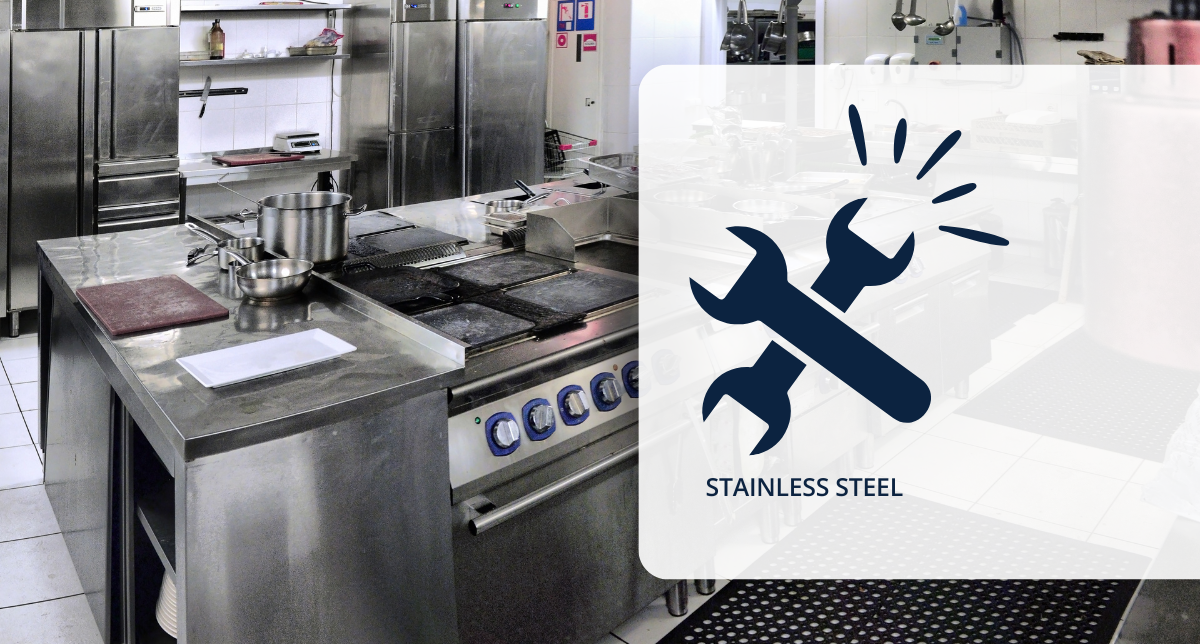
Stainless steel is a top choice for commercial kitchens and foodservice environments because it’s strong, corrosion-resistant, and easy to sanitize. However, even stainless steel can stain, dull, or corrode if it isn’t cleaned correctly.
The good news? With the right tools and techniques, it’s easy to maintain a polished, professional look on all your stainless steel surfaces.
Why Proper Stainless Steel Care Matters
All stainless-steel surfaces have a thin layer of chromium on the outside. The chromium layer chemically reacts with air to create a slick, hard surface that resists stains and corrosion. Anything that damages or interferes with that chromium/air interaction (like dirt, oil or scratches) will cause stainless steel to stain, corrode or rust. That's why, especially in restaurants, frequent cleaning is necessary.
One of the most common issues we see in commercial kitchens is stainless finishes being damaged by harsh cleaners. Using the wrong cleaners or detergents can break down the protective surface layer over time.
This leads to:
- Dullness
- Discoloration
- Premature wear
Proper care goes hand in hand with choosing the right stainless steel in the first place. Different stainless steel grades and gauges vary in how well they resist corrosion, handle frequent cleaning, and stand up to daily wear in commercial kitchens.
Our Stainless Steel Buying Guide explains how grade and gauge influence durability, performance, and long-term maintenance
Tools To Clean Stainless Steel
- Microfiber cloths or soft bar towels
- Warm water
- Mild dish soap
- Spray bottle
- Non-abrasive sponge or soft nylon brush
- Stainless steel cleaner (optional)
- Baking soda (for stubborn spots)
- Food-grade mineral oil or stainless polish (optional)

Step-by-Step Daily Cleaning
Note: The steps below apply primarily to stainless steel equipment and work surfaces. Cleaning methods may vary for other materials, smallwares, and disposable supplies. Always follow manufacturer instructions and local health code requirements when cleaning non-stainless surfaces.
-
Pre-Clean: Remove Loose Debris
- Wipe down surfaces with a dry microfiber cloth to lift dust, crumbs, and loose grime before you introduce moisture.
-
Everyday Cleaning (Daily or After Spills)
- Mix a gentle cleaner: Combine warm water with a few drops of mild dish soap in a bucket or spray bottle.
- Wipe with the grain: Always clean in the direction of the stainless steel grain. This prevents micro-scratches and helps evaporate moisture evenly.
- Rinse: Wipe with a cloth dampened in clean water to remove soap residue.
- Dry completely: Drying prevents water spots and keeps the finish shiny.
While these steps work well for stainless steel equipment, cleaning methods can vary by material. Our Cookware Cleaning Instructions outlines proper care across the most common commercial kitchen materials.

When in doubt, stick to mild soap, warm water, and soft cloths.
Occasional Deep Cleaning
Daily wipe-downs are essential, but they don’t always remove grease buildup, mineral deposits, or heat discoloration. Periodic deep cleaning helps maintain a professional appearance and supports thorough cleaning practices beyond daily wipe-downs. Deep cleaning stainless steel can also help restore its original shine and finish. Deep cleaning stainless steel can help restore that gleaming, new finish.
When to Deep Clean Stainless Steel
Deep cleaning should be done on a scheduled basis and anytime visible buildup appears.
- Weekly or every two weeks for appliances like cooklines, grills, and fryers that are subjected to extreme heat, steam, or heavy oil
- Monthly for lower-contact stainless surfaces such as equipment panels, shelving, and cabinet exteriors
- Following periods of high service demand or seasonal surges
- Prior to preventative maintenance or health examinations
- Anytime streaks, discoloration, or residue persists following standard cleaning
How to Deep Clean Stainless Steel in 5 Steps
- Power Down & Cool: Before cleaning, turn off the equipment and let all surfaces cool fully.
- Eliminate Loose Grease & Debris: Use a dry microfiber cloth to wipe off surfaces to get rid of food residue and grease.
-
Wash with a Stainless-Safe Cleaner: Use warm water and either a stainless steel-approved cleaner or a light dish soap.
- For stubborn buildup or discoloration: A paste made from baking soda and water can be used sparingly on stainless steel surfaces. Test in an inconspicuous area and avoid aggressive scrubbing.
- Wipe with the Grain, Then Rinse: To get rid of residue, gently clean in the direction of the grain and then wash again with clear water.
- Dry & Polish: Use a microfiber towel to buff dry. Apply a thin layer of food-grade mineral oil for gloss.
Just think: Cool → Degrease → Wash → Rinse → Dry → Buff
What to Avoid When Cleaning Stainless Steel

Keeping stainless steel equipment clean helps maintain a professional kitchen environment and supports long-term equipment care. When it’s time to replace worn surfaces or upgrade equipment, choosing stainless steel built for commercial use makes a difference. Explore Burkett’s selection of stainless steel equipment and supplies, or connect with our team for guidance on choosing the right fit for your operation.


