
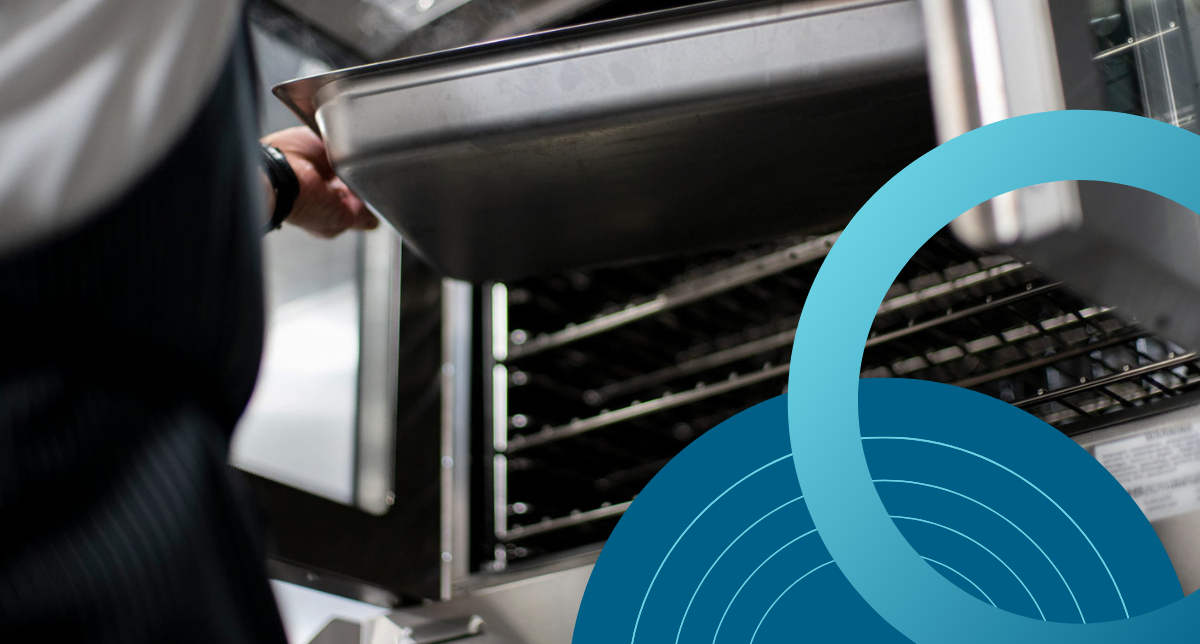
In commercial foodservice, consistency matters just as much as speed. Convection ovens help kitchens cook, roast, bake, and reheat with more even results by moving hot air throughout the cooking chamber.
For restaurants, caterers, schools, healthcare kitchens, and other high-volume operations, the right convection oven process can help. It supports faster service, better batch consistency, and more efficient use of labor and equipment.
This guide explains how commercial convection ovens work, what to adjust when cooking with one, and how to get the best performance from your unit day after day.
What Is a Convection Oven?
A convection oven uses one or more fans to circulate hot air around food. That moving air helps reduce hot and cold spots compared with a conventional oven, where heat is more static.
In a commercial kitchen, that airflow can help food cook more evenly across racks and batches. The result is often better browning, more even doneness, and shorter cook times.
This can vary by recipe, pan type, product load, and oven model.
Why Convection Ovens Matter in Foodservice
A convection oven is not just a faster version of a traditional oven. It changes how heat reaches the food, which can affect timing, texture, moisture, and finished quality.
- Faster cooking or reheating for many menu items
- More consistent results across multiple pans or racks
- Improved browning and crisping on roasted and baked items
- Better throughput during peak service periods
- Potential energy savings when cook times, preheating, and idle time are managed well
For high-volume kitchens, those benefits can help protect quality when orders are coming in quickly and staff need repeatable results.
How Commercial Convection Ovens Work
Most commercial convection ovens rely on three core systems working together:
- Heating elements or burners that generate heat
- Fans or blowers that move hot air through the oven cavity
- An airflow path that distributes heat around pans and food products
Because the fan is part of the cooking process, how the oven is loaded matters. Crowded pans, blocked vents, oversized cookware, or frequent door openings can all reduce performance.
Types of Commercial Convection Ovens
- Full-size convection ovens: Best for high-volume kitchens that need to cook multiple full-size sheet pans at once.
- Half-size convection ovens: A practical choice for smaller kitchens, cafes, concessions, and locations with limited space.
- Countertop convection ovens: Useful for supplemental production, warming, reheating, or smaller batch needs.
- Gas or electric convection ovens: The right choice depends on utility access, capacity needs, installation requirements, recovery time, and operator preference.
- Combi ovens: These combine convection heat with steam and combination cooking modes for kitchens that need more moisture control and menu flexibility.
Adjusting Temperature and Cook Times
When switching from a conventional oven to a convection oven, recipes usually need some adjustment. A common starting point is to reduce the temperature by about 25°F and begin checking food earlier than the original recipe time.
The exact adjustment depends on the product, oven load, pan type, and whether the food is fresh, frozen, covered, uncovered, delicate, or high-moisture. Some recipes may need a shorter cook time, while others may need only a temperature adjustment.
A safer rule of thumb
- Reduce the set temperature by about 25°F when converting from a conventional oven recipe.
- Start checking food earlier, especially during the first few test batches.
- Document the final time, temperature, pan type, and rack position once the result is consistent.
- Use internal temperature checks for proteins and other foods where food safety matters.
Best Practices for Commercial Kitchens
1. Load the oven for airflow
- Leave space between pans so hot air can move around the food.
- Avoid overcrowding racks or blocking vents and fan guards.
- Use the pan type recommended for the product. Perforated pans can help airflow for some items, while covered pans can help protect moisture when needed.
2. Preheat before loading
Preheating helps the oven reach the proper cooking environment before food is loaded. Many commercial oven manuals instruct operators to wait until the oven indicates it has reached the set temperature before loading product.
3. Load quickly and safely
Every open door releases heat and can disrupt consistency. Train staff to stage pans before opening the oven, load efficiently, and close the doors promptly.
4. Use rack positioning intentionally
- Place pans evenly across racks instead of crowding one section.
- Center pans on racks when possible.
- Rotate pans only when needed. Many modern convection ovens reduce the need for rotation by design, but the unit and load still determine the results.
5. Manage moisture
Convection ovens use dry moving air, which helps with browning and crisping but can dry out some foods. Covered pans, sauces, shorter cook times, or combi oven steam modes can help protect moisture when the menu item requires it.
Food-Specific Tips
Proteins
- Convection can help produce browned exteriors on roasted meats and poultry.
- Start checking earlier than you would in a conventional oven.
- Use a calibrated thermometer to verify internal temperatures instead of relying on time alone.
Baked goods
Convection can work well for cookies, pastries, rolls, and many breads because it promotes even browning. Use caution with delicate items like cakes, custards, and souffles because airflow can affect rise, texture, or surface finish.
Frozen and prepared foods
Convection ovens are useful for reheating, finishing, and crisping frozen or prepared foods. Moving air reduces sogginess and improves texture.
Vegetables
Roasted vegetables often benefit from convection because dry, circulating heat encourages browning and caramelization. Avoid overloading pans so moisture can escape and edges can brown.
Common Mistakes to Avoid
- Overcrowding the oven, which blocks airflow and slows cooking.
- Using conventional oven times without checking early.
- Choosing pans that limit airflow for foods that need crisping.
- Opening the oven doors too often during service.
- Failing to standardize time, temperature, pan type, and rack position.
- Skipping cleaning around racks, vents, fan covers, or door gaskets.
Small process changes can make a major difference. When every shift uses the same temperature, timing, loading pattern, and doneness checks, the oven becomes more reliable.
Choosing the Right Convection Oven
If you are buying or upgrading a commercial convection oven, match it to your menu and volume.
Also match it to your space, utility access, and staff workflow.
Capacity
- Choose full-size, half-size, or countertop capacity based on your production needs.
- Consider peak periods, batch sizes, and whether the oven will be used as a primary cooking tool or supplemental unit.
- Avoid under-buying if the oven will become a bottleneck during rush periods.
Controls
- Manual controls can be simple and familiar for many teams.
- Digital and programmable controls can improve consistency across shifts.
- Recipe presets can help reduce training gaps for repeat menu items.
Cleaning and maintenance access
- Look for accessible racks, interiors, fan covers, and door gaskets.
- Confirm cleaning requirements in the owner manual before purchase.
- Consider how easy the oven will be for staff to clean during daily operations.
Ventilation and installation
Commercial ovens must be installed according to the manufacturer instructions and applicable local code requirements. Utility connections, clearances, ventilation, and hood requirements can vary by model and location, so confirm these details before ordering.
Energy use and operating cost
Energy use depends on the oven type, model, loading practices, preheat time, idle time, and maintenance. ENERGY STAR certified commercial ovens can offer documented efficiency benefits compared with standard models, which may support lower operating costs over time.
Convection vs. Combi Ovens: What Is the Difference?
A convection oven cooks with dry, circulating heat. A combi oven adds steam and combination modes, allowing operators to control both heat and humidity.
Consider a combi oven when you need:
- Precise moisture control
- Greater menu flexibility in one piece of equipment
- Steam cooking, proofing, roasting, baking, reheating, or holding in one unit
- More control over delicate products or items that dry out easily
Combi ovens usually require a higher upfront investment and additional training, so a standard convection oven remains a practical choice for many restaurants, schools, caterers, and institutional kitchens.
Training Tips for Kitchen Teams
- Create standardized recipes with convection-adjusted times and temperatures.
- Build a quick-reference chart for common menu items.
- Train staff on loading patterns, rack spacing, preheating, and door management.
- Use internal temperature checks where needed.
- Document successful settings so each shift can repeat the same result.
Get More from Your Commercial Convection Oven
Commercial convection ovens can be one of the most useful tools in a foodservice kitchen. They perform best when staff understand how airflow changes the cooking process.
Start with small adjustments, check food earlier, protect airflow, and document what works. With the right process, your kitchen can improve speed, consistency, and finished food quality across the menu.
Need help choosing the right convection oven for your operation? Burkett can help you compare capacity, fuel type, controls, installation needs, and available options so you can find a unit that fits your kitchen.


