
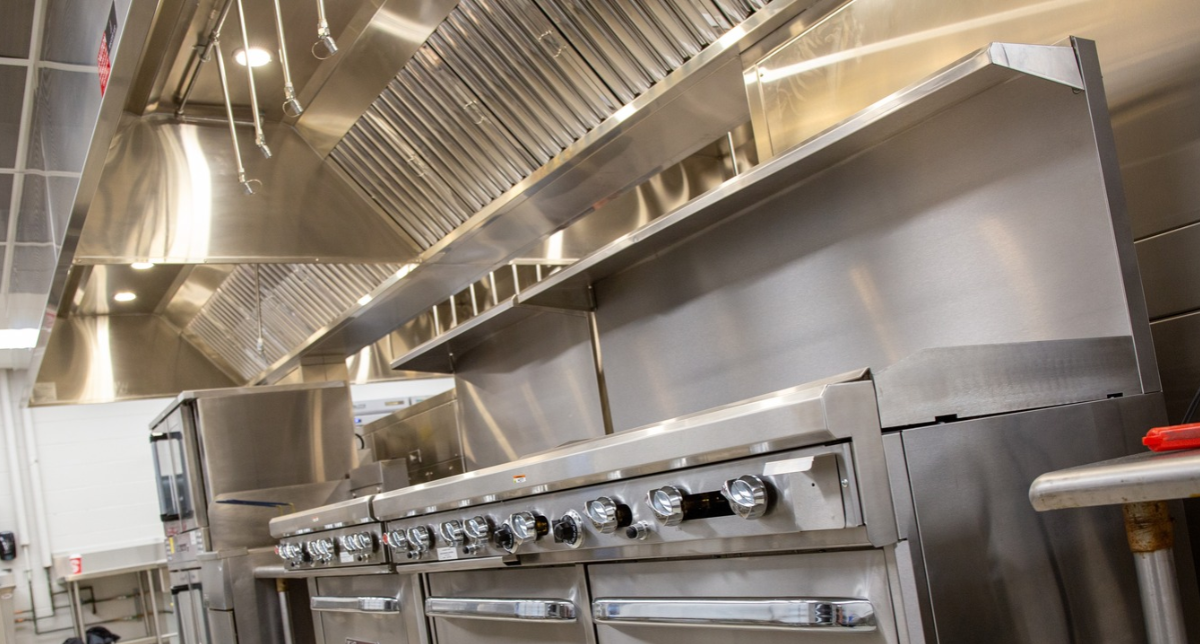
Every commercial kitchen needs proper ventilation, but not every kitchen requires the same type of exhaust hood. The cooking equipment you use, the food you prepare, and the heat, grease, or moisture produced during operation all influence which hood system is appropriate.
Two of the most common classifications are Type I and Type II commercial kitchen hoods. Although both remove unwanted air from the kitchen, they serve different purposes and have different installation and safety requirements.
Understanding these differences early in the planning process can help restaurant owners avoid costly equipment changes, ventilation problems, and delays during construction or inspections.
What Is the Difference Between Type I and Type II Hoods?
The primary difference between Type I and Type II hoods is the type of exhaust they are designed to handle.
- Type I hoods, also called grease hoods, capture and remove grease-laden vapors, smoke, and heat produced during commercial cooking.
- Type II hoods, sometimes called condensate or heat hoods, remove heat, steam, moisture, and odors from equipment that does not produce grease-laden vapors or cooking smoke.
A Type I hood is typically required for cooking appliances such as fryers, griddles, and charbroilers. Type II hoods are commonly used above commercial dishwashers and certain steam-producing appliances.
Type I vs. Type II Hood Comparison
| Feature | Type I Hood | Type II Hood |
|---|---|---|
| Primary purpose | Removes grease, smoke, and heat | Removes steam, moisture, and heat |
| Common name | Grease hood | Condensate hood or heat hood |
| Typical equipment | Fryers, griddles, ranges, charbroilers | Dishwashers, certain steamers and kettles |
| Grease filtration | Required | Not generally required |
| Fire suppression | Generally required as part of the grease-producing cooking system | Generally not required for non-grease applications |
| Ductwork | Grease-rated exhaust system with specialized construction requirements | Non-grease exhaust system appropriate to the application |
| Common environments | Restaurant cooking lines, commercial kitchens, food trucks | Dishwashing areas, certain institutional and foodservice kitchens |
The correct hood depends on the actual cooking process and equipment specifications, not simply the appliance name or whether it uses gas or electricity.
What Is a Type I Commercial Kitchen Hood?
A Type I commercial kitchen hood is designed for cooking processes that generate grease-laden vapors or smoke. These systems capture cooking exhaust before it spreads throughout the kitchen and direct it through a dedicated exhaust system.
Type I systems commonly include grease filters, grease-resistant ductwork, exhaust fans, and an approved fire suppression system. Together, these components help manage airborne cooking byproducts and reduce fire hazards associated with grease accumulation.

Common Applications for Type I Hoods
- Commercial deep fryers: Used for french fries, chicken, seafood, and other fried foods.
- Griddles and flat-top grills: Common in diners, breakfast restaurants, and burger operations.
- Charbroilers and grills: Produce grease-laden smoke when cooking meats and other foods.
- Commercial ranges and sauté stations: Often generate grease vapors during frying, sautéing, and other high-heat cooking.
- Certain commercial ovens: May require Type I ventilation depending on the foods prepared and operating conditions.
A burger restaurant with a charbroiler and deep fryer, for example, will typically require a Type I hood above those appliances.
Important: Cooking with electricity does not automatically eliminate the need for a Type I hood. Grease and smoke emissions, appliance listings, and applicable codes determine ventilation requirements.
What Is a Type II Commercial Kitchen Hood?
A Type II commercial kitchen hood removes heat, steam, moisture, and certain odors from equipment that does not produce grease-laden vapors or cooking smoke. They generally do not require the same grease filtration and fire suppression components used in Type I systems.
Type II hoods can be particularly valuable in dishwashing areas, where excessive moisture can create uncomfortable working conditions and contribute to condensation on surrounding surfaces.

Common Applications for Type II Hoods
- Many high-temperature commercial dishwashers: Produce heat and water vapor during wash and rinse cycles. Some listed condensing or ventless models may not require a hood.
- Certain commercial steamers: Release steam without producing grease-laden exhaust.
- Steam-jacketed kettles: May require moisture and heat removal depending on use.
- Certain warming or cooking equipment: May qualify when grease and smoke are not produced.
Not every steam-producing appliance requires a Type II hood. Some appliances include condensation systems or have installation requirements that allow alternative ventilation approaches. Always review manufacturer specifications and confirm requirements with the local authority having jurisdiction (AHJ).
Which Commercial Kitchen Equipment Requires Which Hood?
| Equipment | Typical hood requirement | Why |
|---|---|---|
| Commercial deep fryer | Type I | Produces grease-laden vapors |
| Charbroiler | Type I | Produces grease-laden vapors |
| Commercial griddle | Type I | Produces grease-laden vapors |
| Commercial range | Type I | Produces grease-laden vapors |
| Pizza oven | Depends | Fuel source, cooking process, and listing affect requirements |
| Commercial convection oven | Depends | Food preparation and emissions determine requirements |
| Combi oven | Depends | Steam-only and grease-producing processes differ |
| Commercial steamer | Type II or other approved ventilation | Produces heat and moisture |
| High-temperature dishwasher | Type II or approved alternative | Produces heat and moisture |
| Steam-jacketed kettle | Depends | Ingredients, emissions, and use affect requirements |
Note: This table is general planning guidance, not a substitute for code review or appliance-specific ventilation requirements.
Can a Type II Hood Replace a Type I Hood?
No. A Type II hood cannot replace a required Type I hood over grease-producing cooking equipment. However, a properly designed Type I hood can often be used in an application that otherwise requires a Type II hood.
When multiple appliances share one hood, the requirements of the most demanding appliance must be considered. For example, placing a steamer beside a commercial fryer does not eliminate the fryer’s need for Type I ventilation.
Frequently Asked Questions About Type I and Type II Hoods
Do all commercial kitchens need a Type I hood?
No. Type I hoods are generally required when cooking equipment produces grease-laden vapors or smoke. Kitchens with only non-grease-producing equipment may qualify for Type II ventilation or other approved solutions, depending on equipment and codes.
Can I use a Type II hood over a commercial oven?
Possibly, but it depends on the oven and its use. Certain ovens may qualify for Type II ventilation, while ovens used for grease-producing processes may require a Type I hood. Consult manufacturer specifications and the local code authority.
Does a commercial electric fryer need a Type I hood?
Generally, yes. Electric fryers produce grease-laden vapors even without an open gas flame. The fuel source alone does not determine the hood requirement.
Do ventless commercial cooking appliances need exhaust hoods?
Not always. Certain listed ventless appliances and recirculating systems may qualify for exceptions. Approval depends on equipment listings, installation instructions, cooking processes, and local regulations.
Can Type I and Type II hoods be installed in the same kitchen?
Yes. A restaurant may use a Type I hood over its cooking line and a Type II hood above dishwashing equipment.


